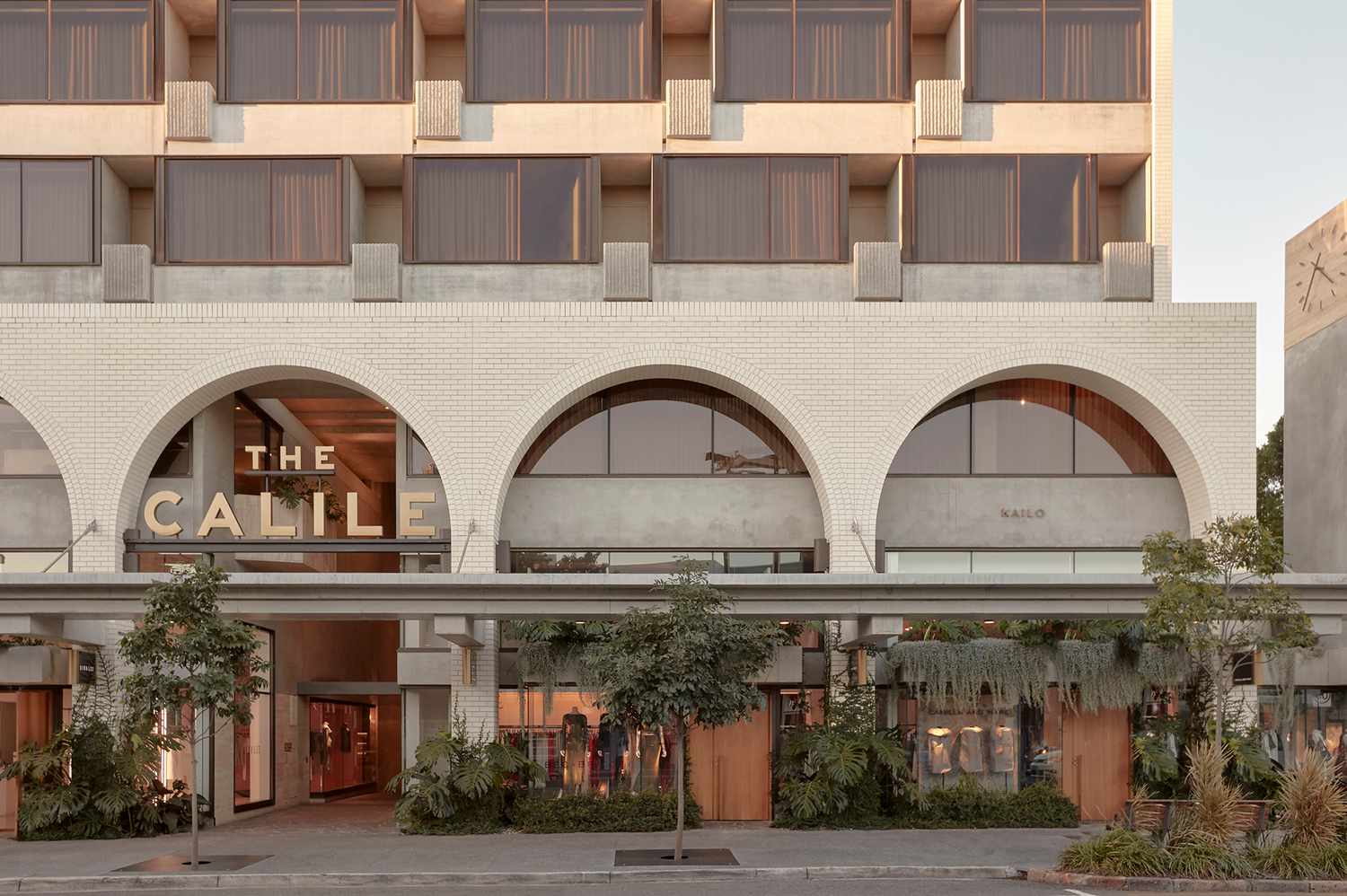

For most of the last fifteen years, the answer to "where do you stay in Brisbane?" was a polite shrug. There was the riverside business hotel. There was the airport business hotel. There was the apartment-with-a-balcony you pretended was a hotel. And then, in 2018, on a corner of James Street that used to be a car park, the Malouf family opened The Calile — and Brisbane stopped being a stopover.
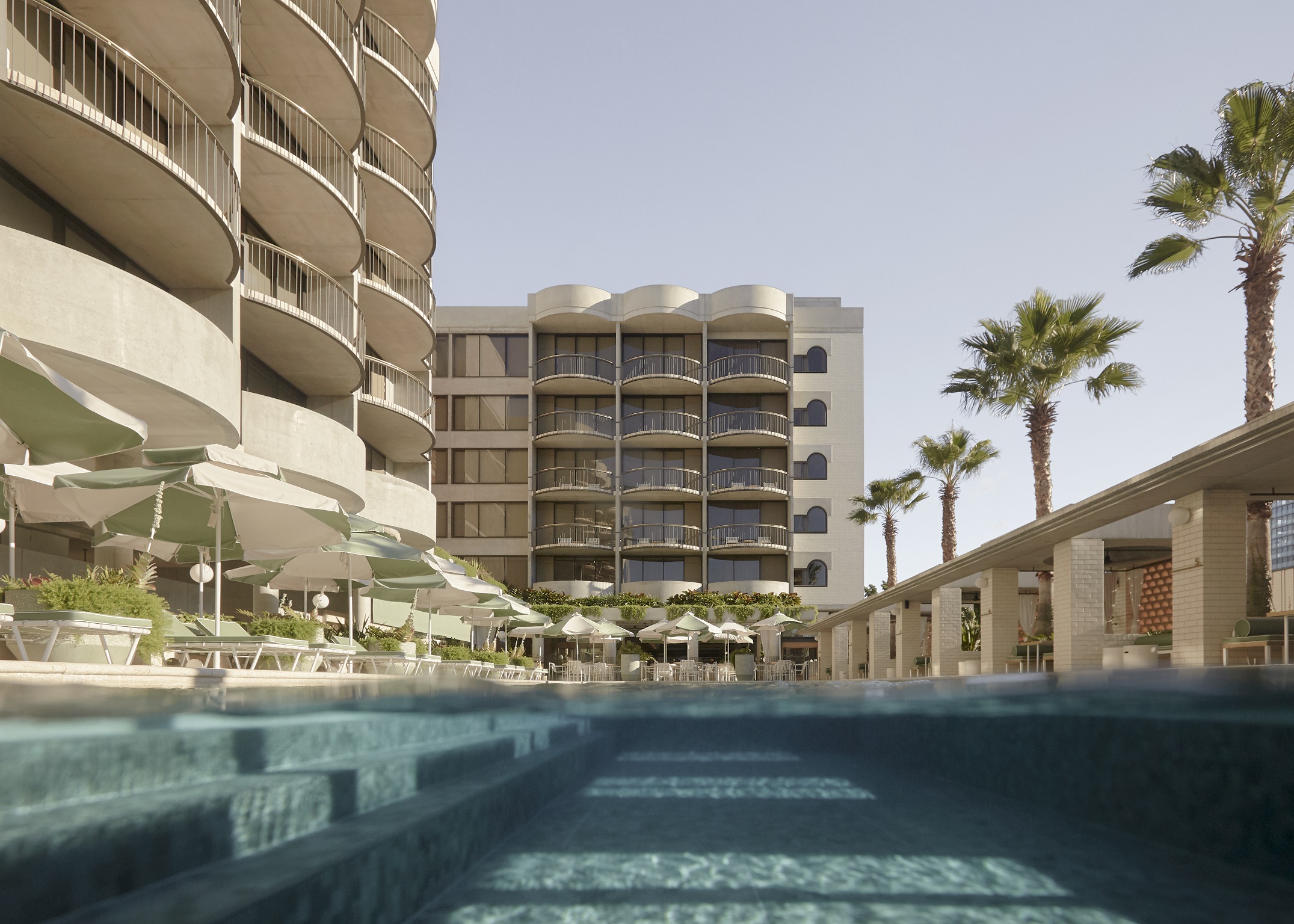
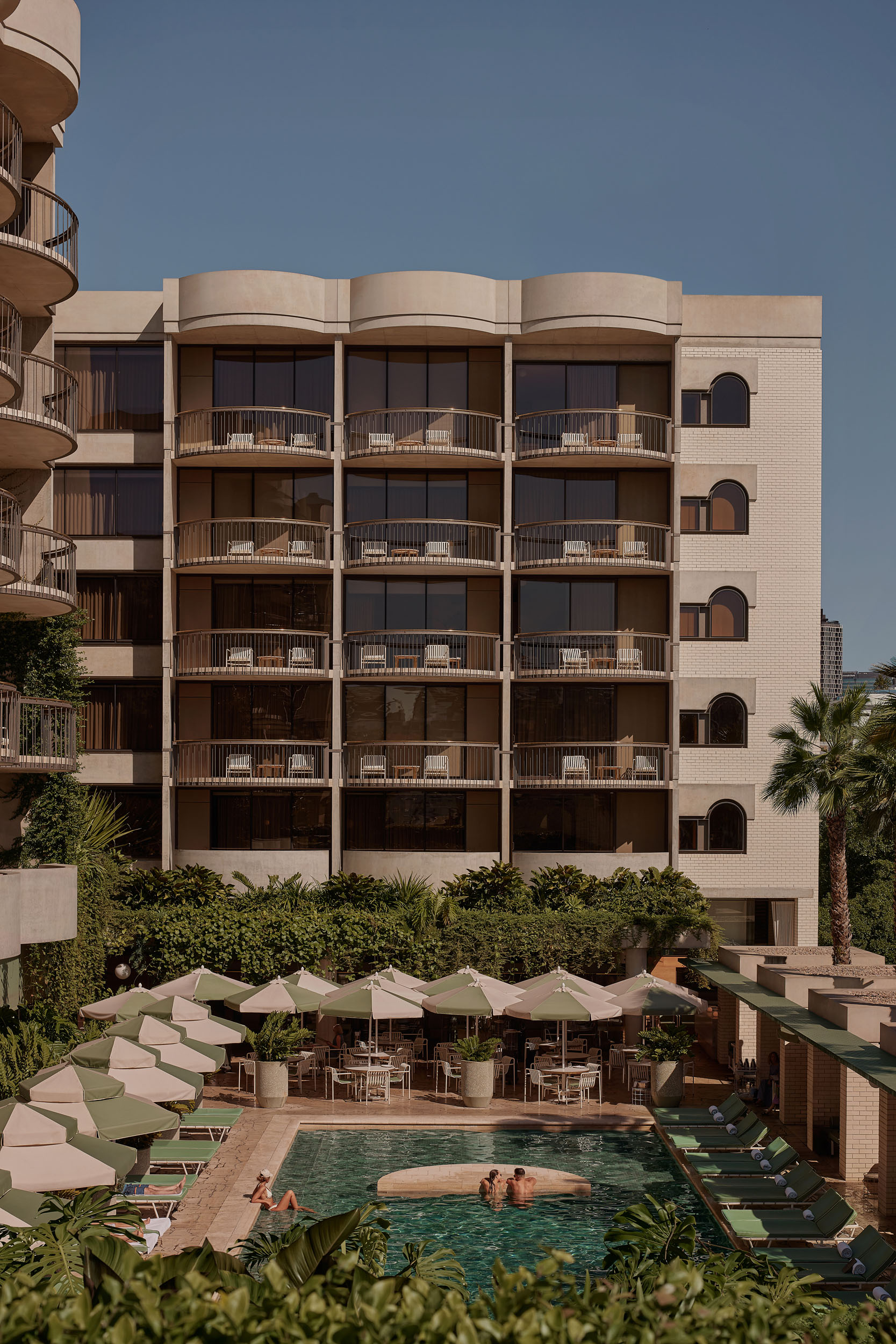
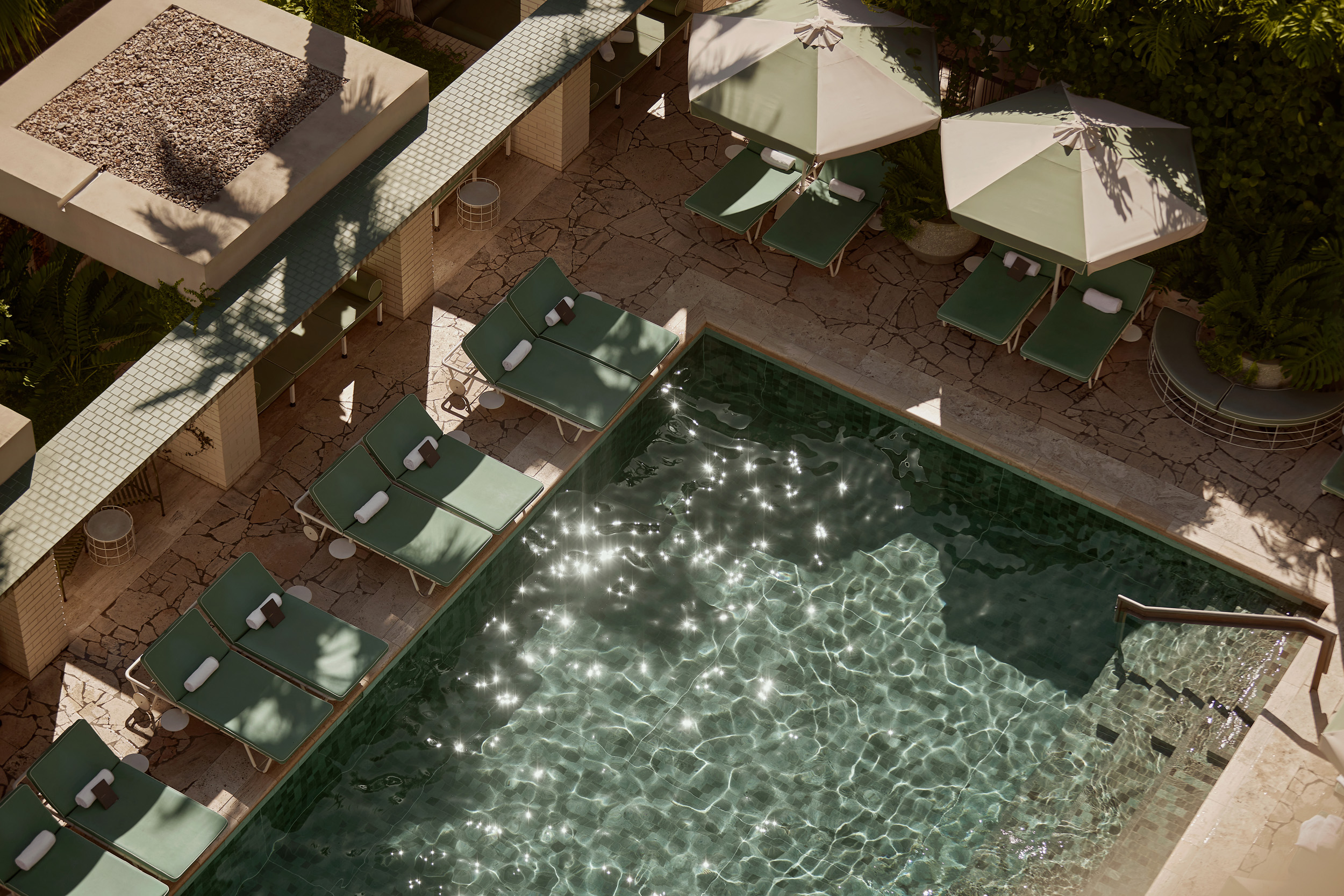
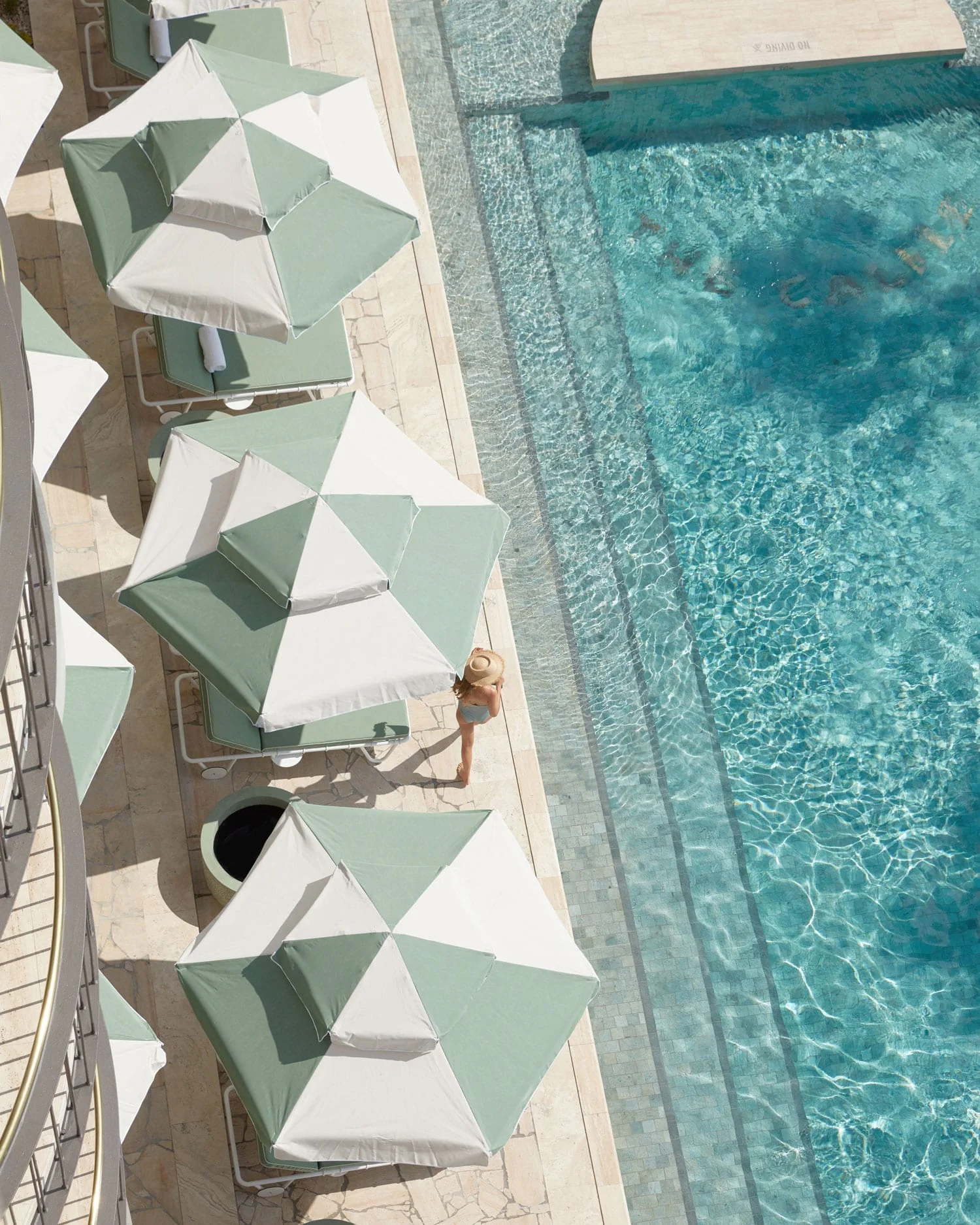
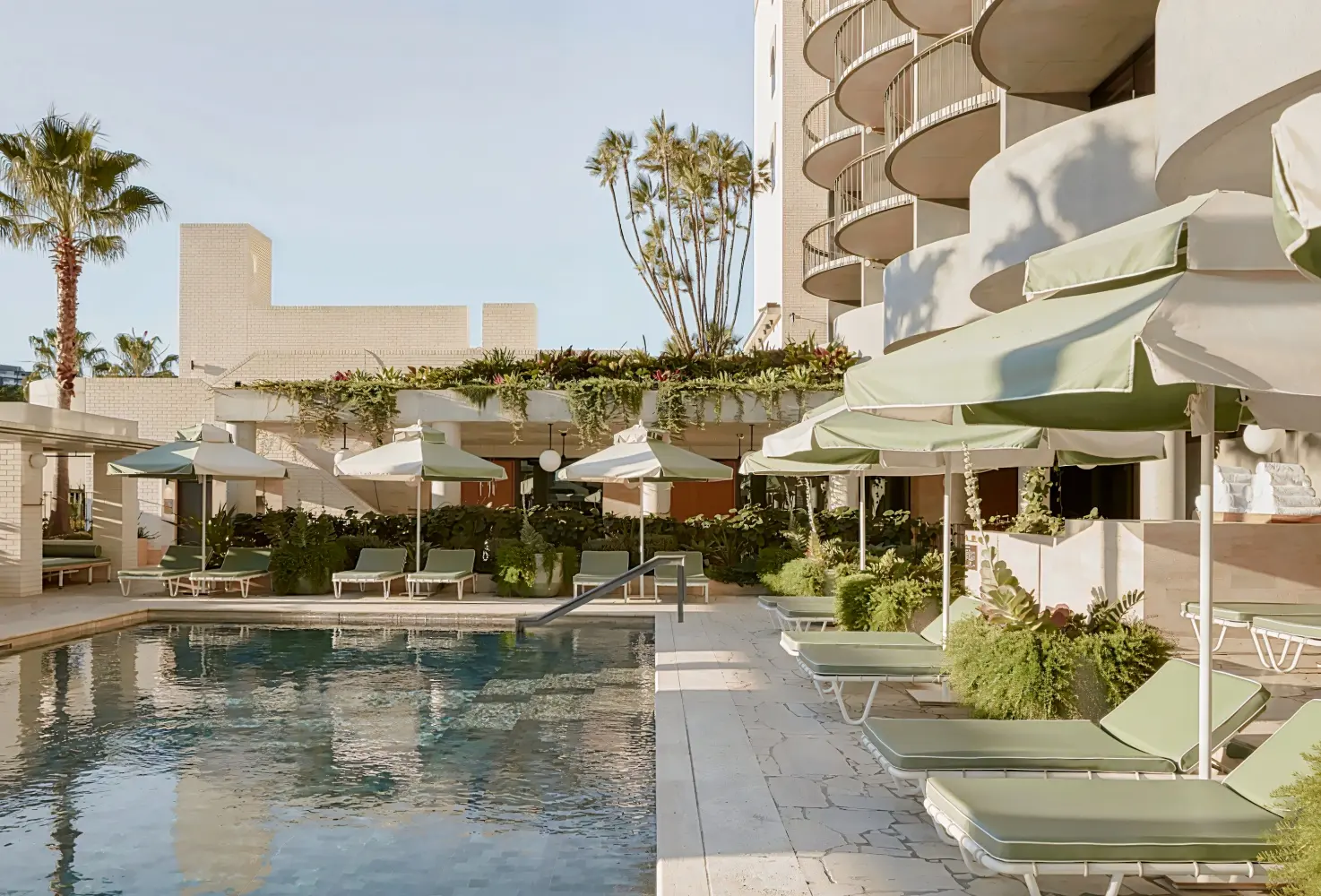
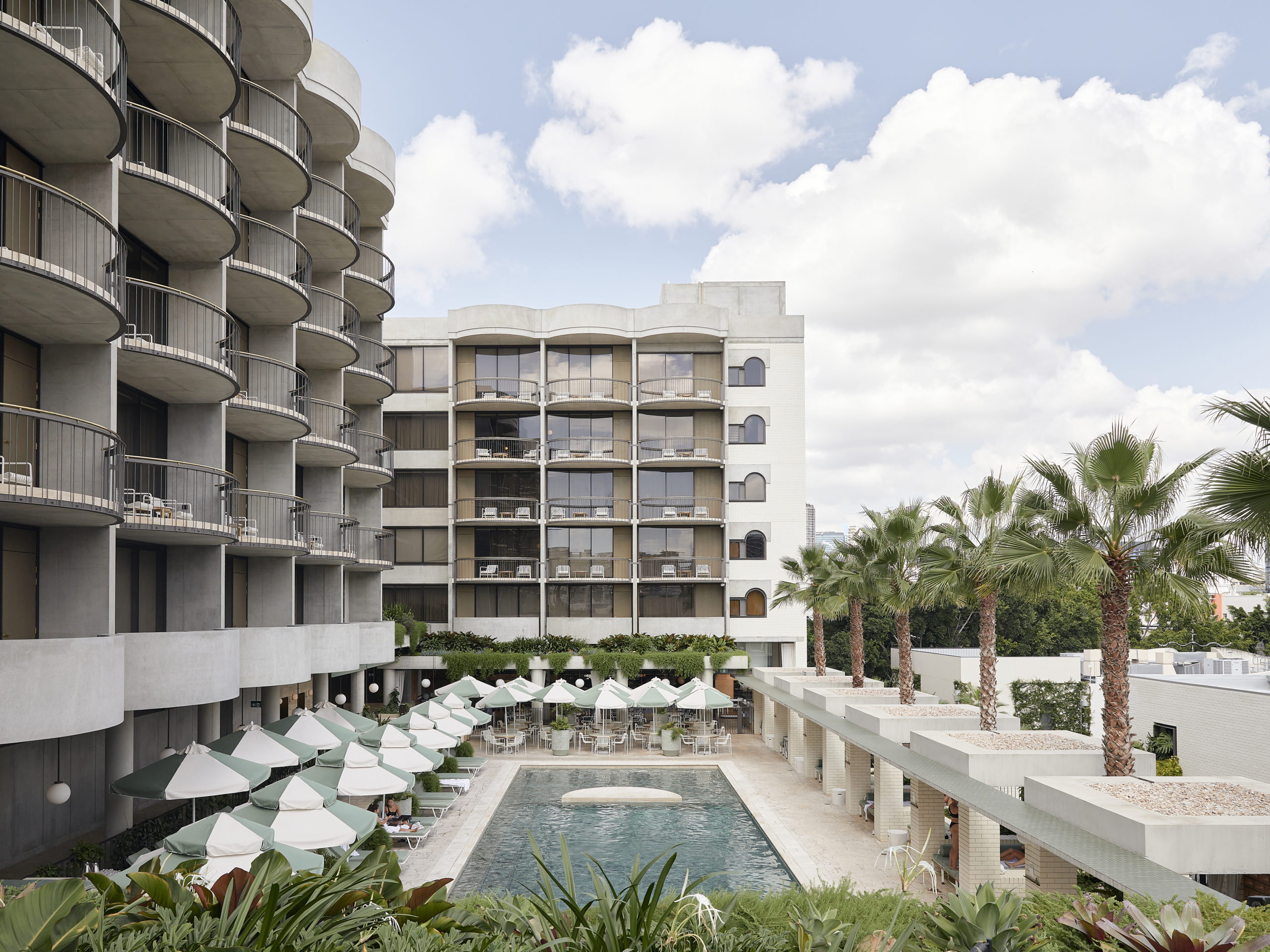
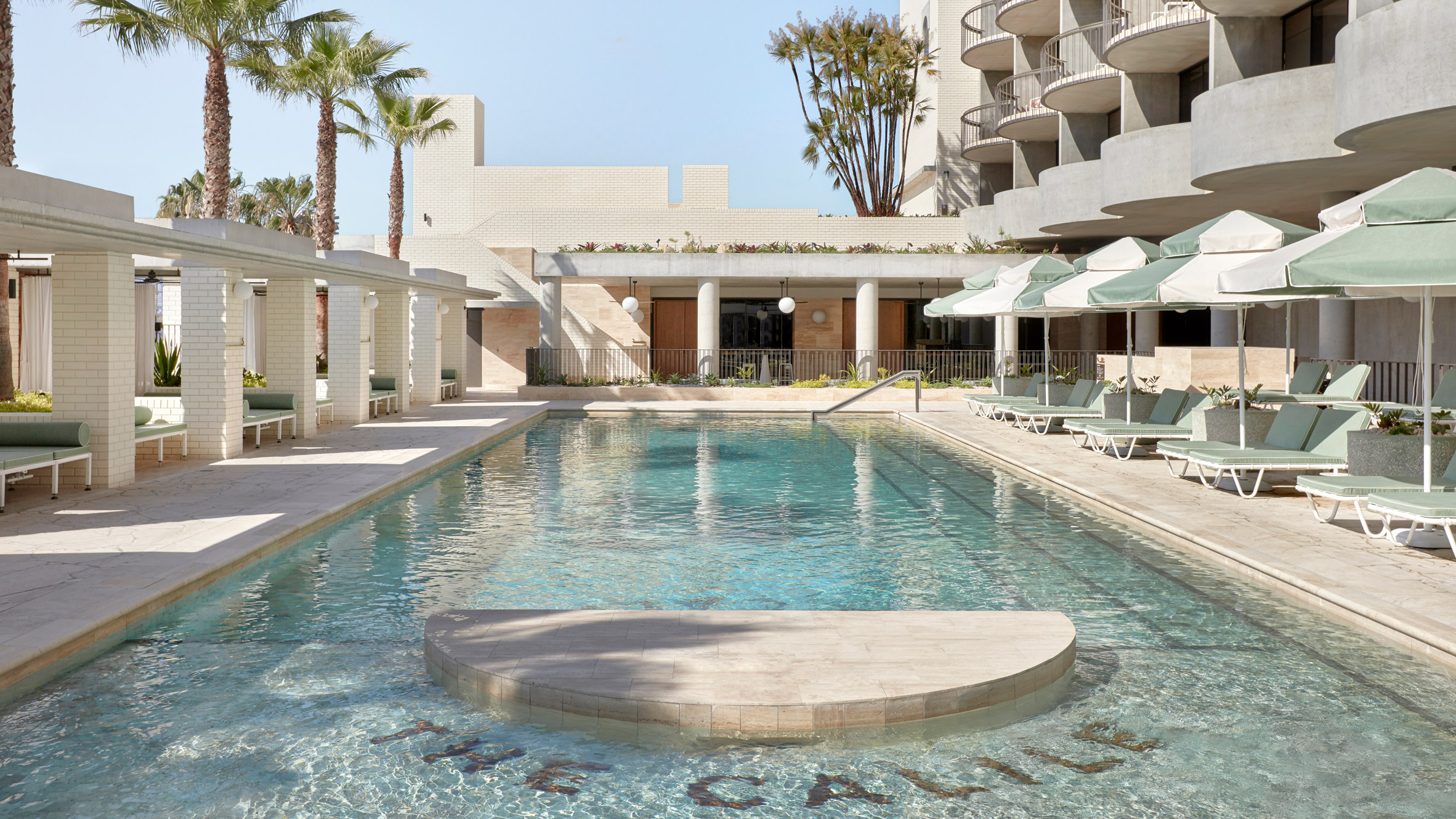
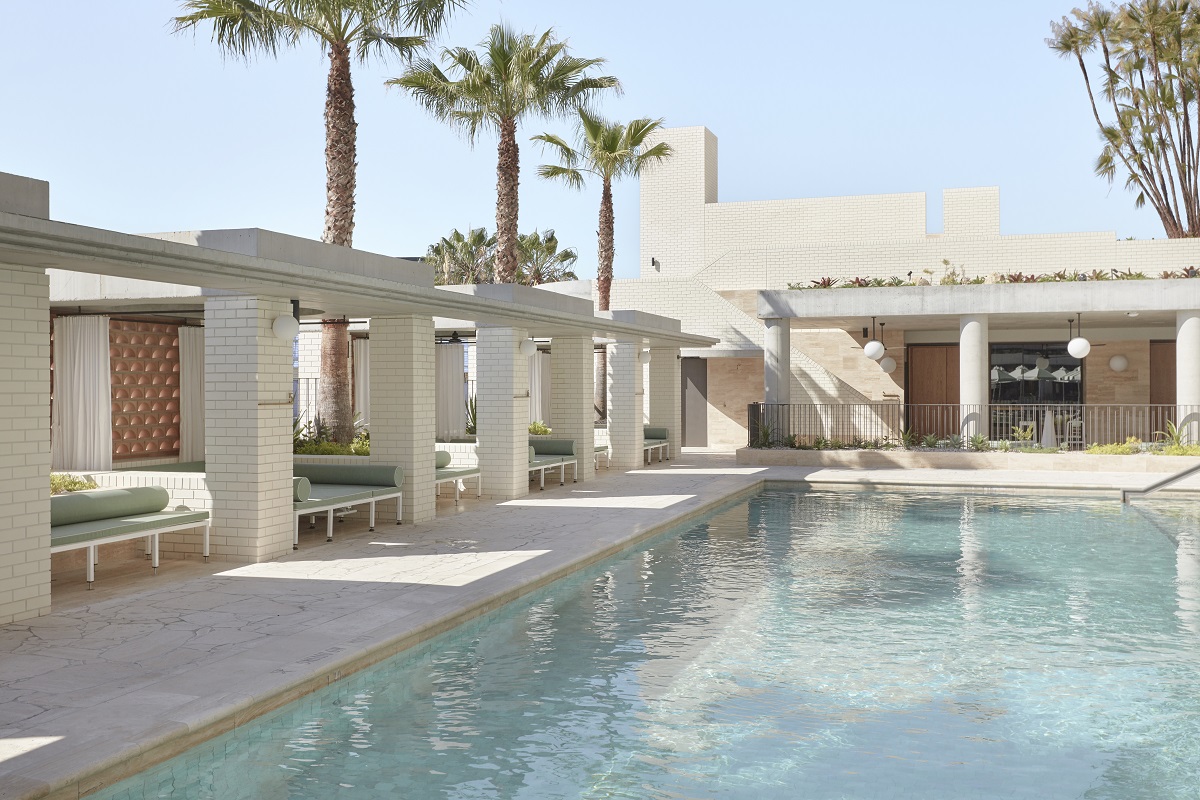
The building, by Richards & Spence, is what makes the place. Two curved wings clad in pale brick and travertine sit either side of an open-air courtyard, with a long pool, a row of cabanas, and a fringe of date palms running between them. It is not pretending to be anywhere else. It looks, very specifically, like Brisbane finally took itself seriously.
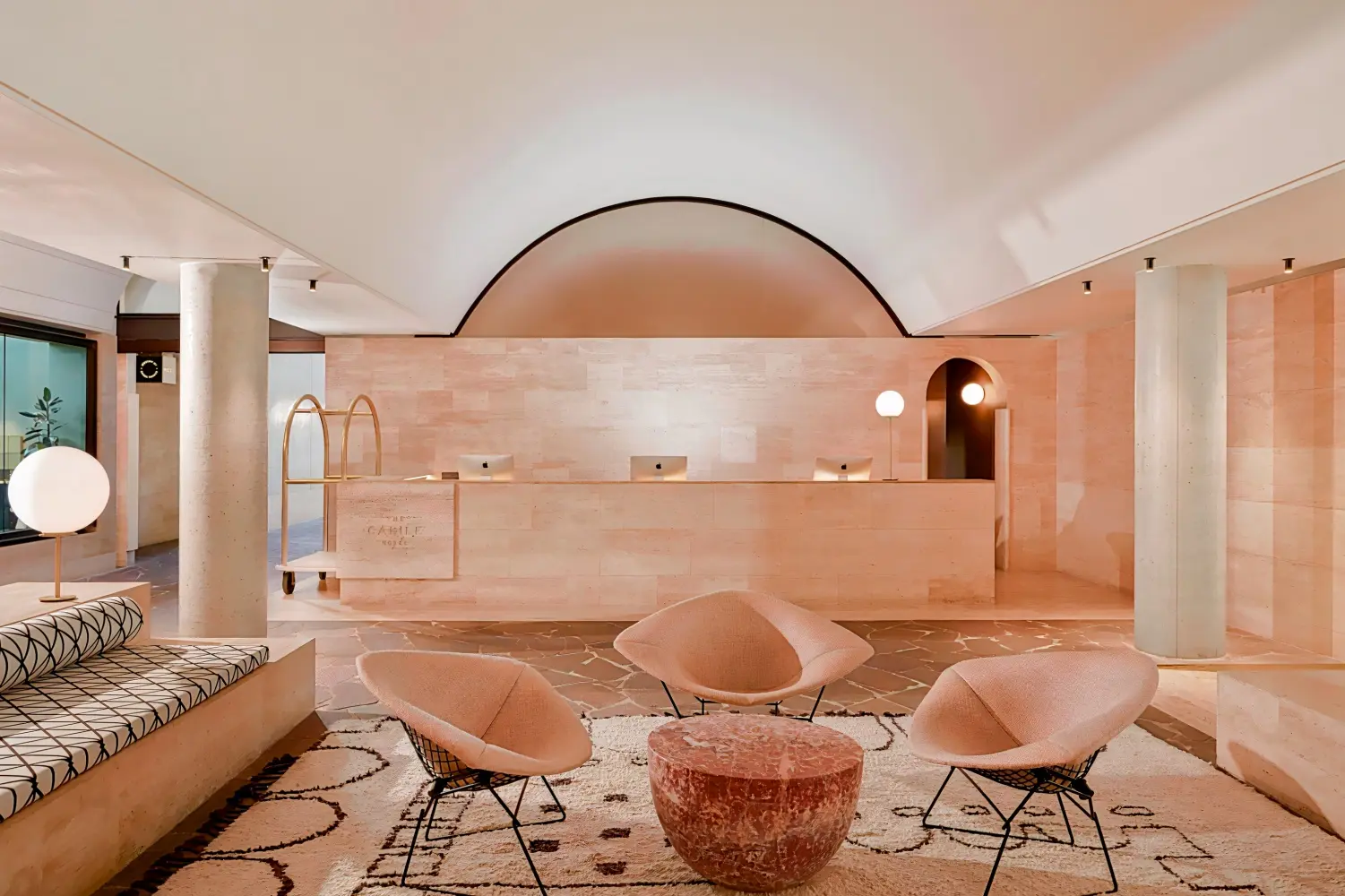
You arrive through a quiet portico off James Street — past the bakery, past the bookshop, past the wine bar that opens at four — and the lobby reads as a continuation of the precinct rather than a hotel. There is no porte-cochère. There is no bell. A woman behind a small travertine desk asks if you would like a sparkling water, and that is the welcome.
175 rooms, one material palette,
almost no missteps.
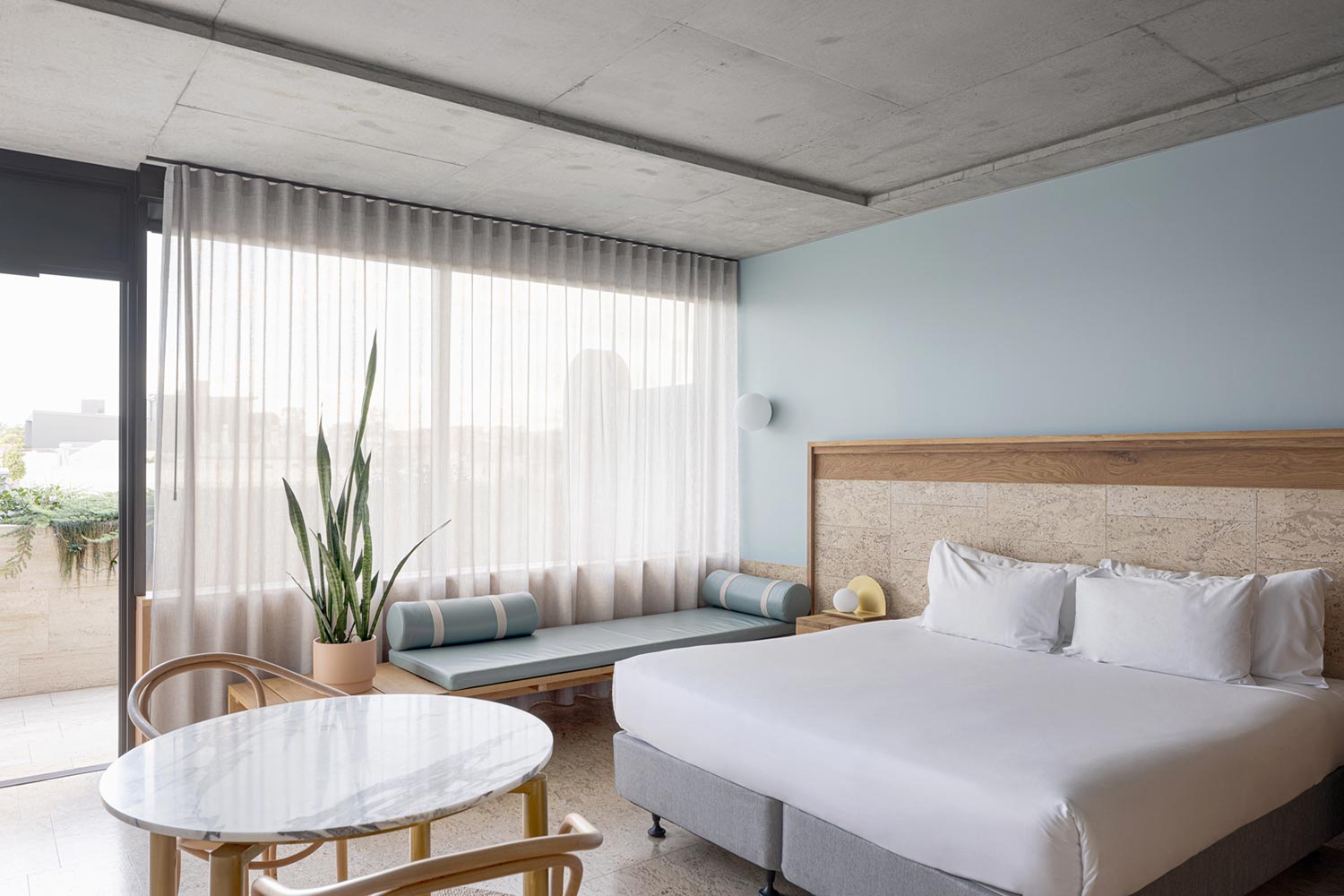
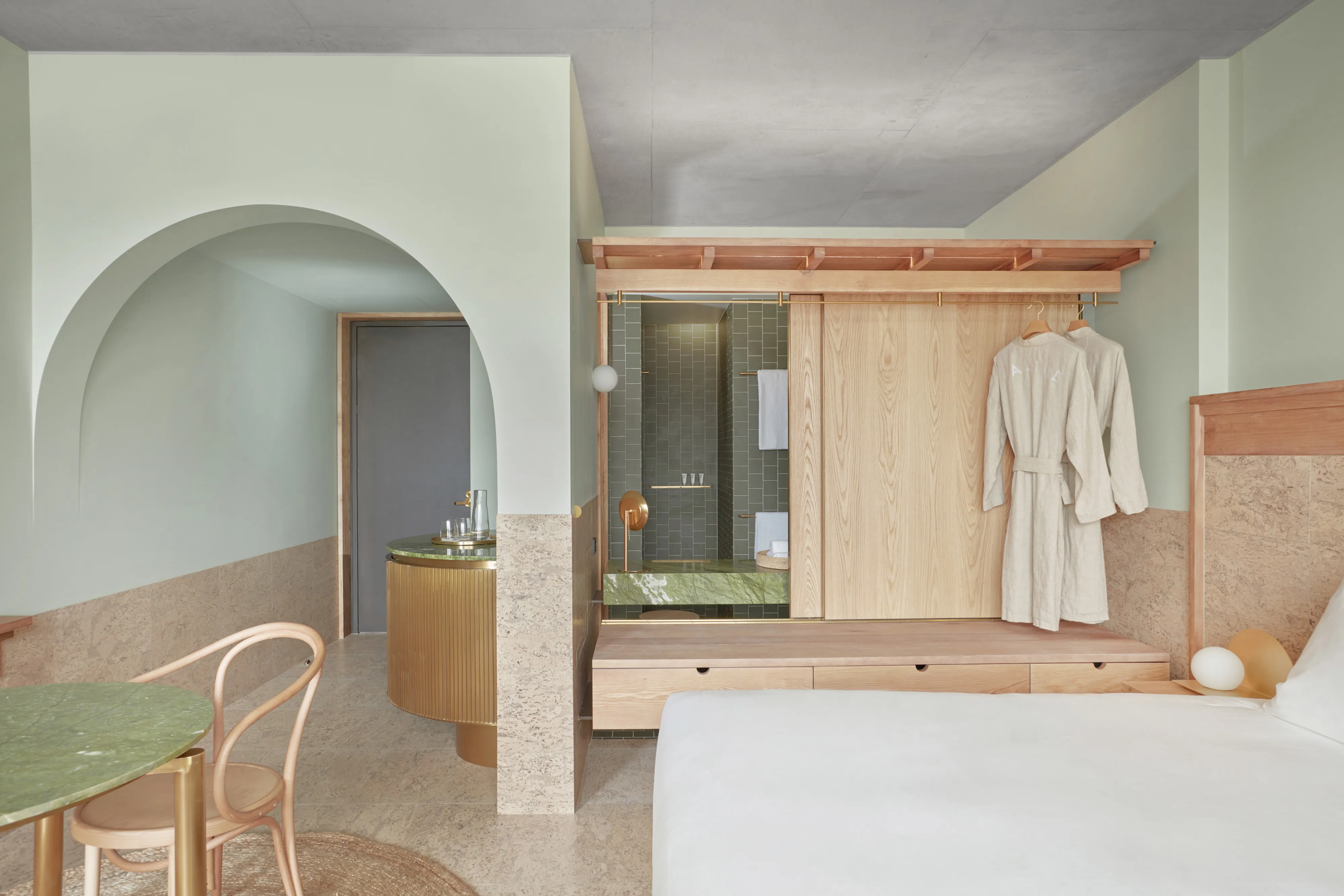
Concrete ceilings, travertine joinery, mint-green and pale-blue accent walls — a vocabulary borrowed from Italian modernism and applied with the discipline of a single architect.
There are seven room types, which is one too many to remember and not enough to confuse you. The headline category — the Pool Terrace Room — opens directly onto the pool deck through a sliding glass wall, and is the only room in Australia where you can step out of bed and into a swim. The Skyline Suite, top floor, faces the city; Urban Terrace Rooms face the street and get the morning light. There is no bad room.
The standard finishes are the right finishes: linen sheets, locally made ceramics on the dresser, a small Marshall radio, a generous travertine bathroom with a wide curtained shower, and arched joinery housing the wardrobe and minibar. The minibar is stocked with Australian wine and Brisbane gin. There is no in-room television in the bathroom and no robe folded onto the bed.
One quiet complaint: in the older wing, the soundproofing between rooms is good but not perfect. If you draw the long straw of a child next door, you will know.
The first hotel pool in Australia
worth flying for.
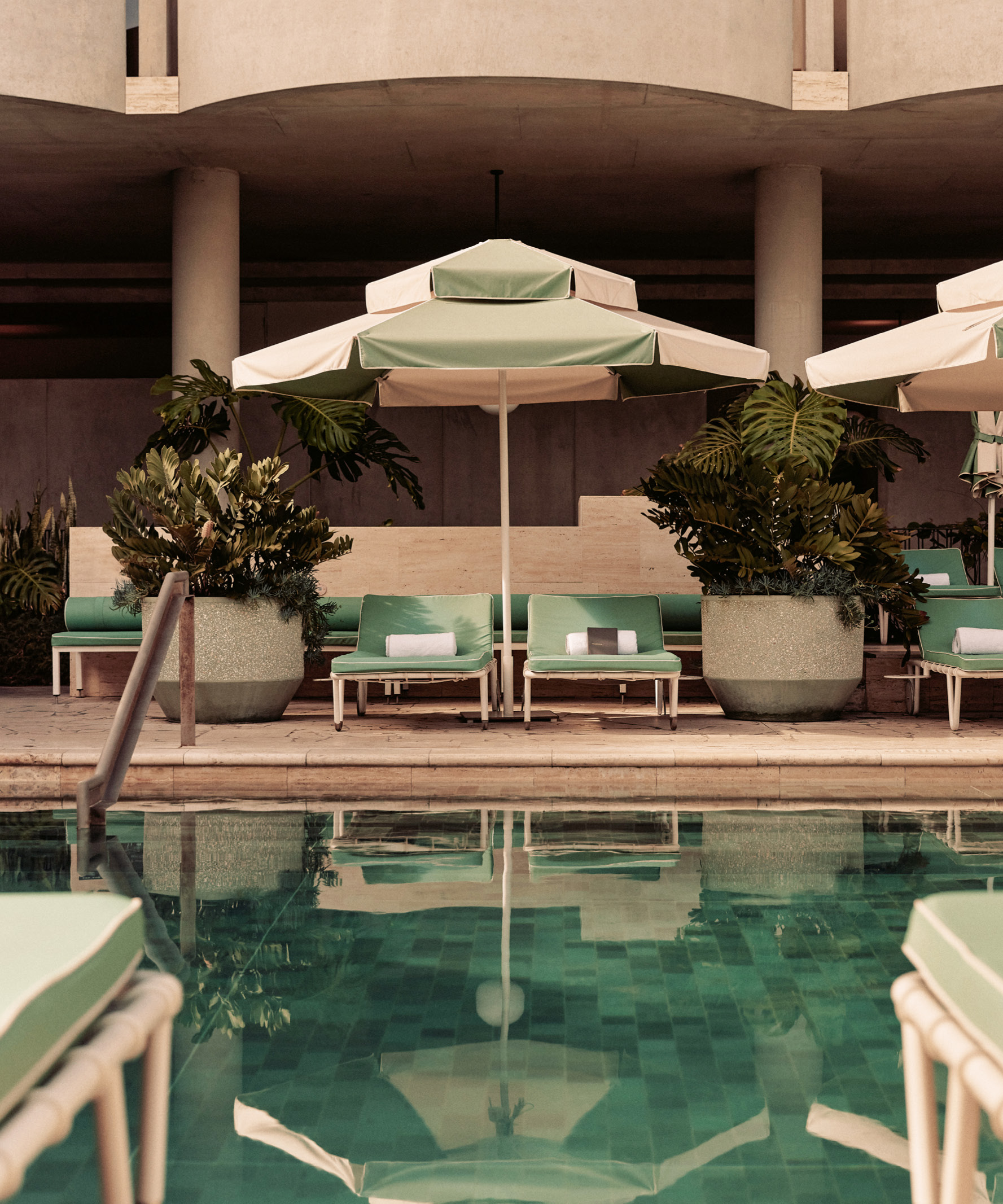
Most hotel pools are an amenity. The Calile's pool is the property. It is twenty-five metres long, with a circular wading island at one end, and the curved building wraps it so cleanly that you forget — actually forget — that you are on a six-lane road in Fortitude Valley. The cabanas down the eastern flank have built-in benches, brick walls, brass hooks, and a small green canvas curtain. They are not for sale by the hour. You either have one because you booked a room, or you do not. The discipline of that decision is what makes it work.
By 11am on a Sunday in March the pool is full, but not loud. The music is quiet. The waiters move on the diagonal. Lunch arrives on linen-covered trays. A woman behind us is reading Joan Didion. A man across the pool is asleep with a hat over his face. This is, as far as we can tell, the right way to spend a Brisbane afternoon.
A precinct, not a hotel restaurant.
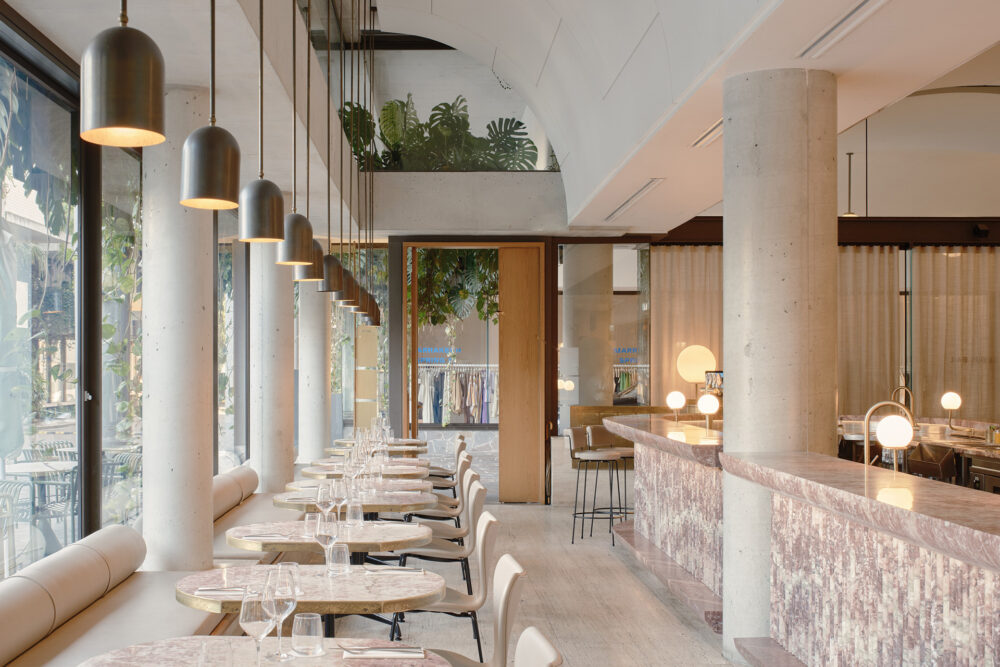
This is where the Malouf strategy becomes obvious. The Calile is owned by the family behind the broader James Street precinct, and the food and drink offering is calibrated to spill across both. The hotel proper has Hellenika — a Greek restaurant with a Bondi sibling, a marble counter, brass pendant lights, and a wine list that takes its job seriously. Sasaki, the omakase counter, is sixteen seats and one of the harder reservations in the city.
Breakfast is in The Lobby — a curated, open-plan room that doubles as the morning coffee bar and the late-afternoon negroni spot. The juice is house-pressed. The pastries are from a Calile-owned bakery. The eggs are from the family farm in Stanthorpe. There is something quietly impressive about how vertically integrated this is, without ever being smug about it.
If we have one note for the kitchen: the breakfast menu has not changed meaningfully in two years. The dinner offering rotates. The morning offering ought to keep up.
"You can tell, after a single day at the Calile, what every Australian hotel built since 2020 was secretly trying to be."
Holiday Reviews · EditorialThe thing it taught Australia.
The Calile's lasting effect is not the building, or even the pool. It is the operating belief that a city hotel can be a destination — that locals can be the primary audience, that food and drink can be the lead, and that the architecture itself is the marketing. Every notable Australian opening since — Ace Sydney, the new Capella, the quieter coastal projects — has lifted a vocabulary from here. Some have lifted the entire dictionary.
What it isn't, eight years in, is a small property. With 175 rooms it can occasionally feel busy in the lifts, busy in the lobby, busy at breakfast. The Pool Terrace Rooms book out four months ahead in summer. The cabanas the same. If you want the Calile experience as promised, book the shoulder months and book early — and book the Pool Terrace.
Eight years in, it is still the most considered city hotel in Australia. It is also no longer the only one — and that, in a small and very specific way, is the Calile's greatest contribution to Australian hospitality. It made the rest of the country try harder.